
STB Chapter 1 — The Question That Started Everything
Why existence requires instability — and why perfect nothingness could never remain perfect.
Why does anything exist at all?
It is the oldest question in human thought — simple, undeniable, and impossible to ignore.
Stars exist.
Atoms exist.
Galaxies exist.
Minds exist.
And this single fact forces a deeper truth: existence must have a mechanism.
For centuries, people have repeated the phrase “something came from nothing.” But that phrase explains nothing. It doesn’t show how nothing could produce something — it simply steps over the most important question in reality.
This book begins with a chain of logic that cannot be avoided:
- We exist.
- Therefore,existence is possible.
- Therefore,the state before existence must allow existence to emerge.
- Therefore, that “nothingness” could not have been perfectly nothing in the absolute sense.
- And the result of that not-nothing property… is everything that exists.
This is not philosophy for reassurance.
This is the start of physics — at the only place physics can honestly begin.
The First Requirement: Nothingness Must Come Before Everything
Modern cosmology often begins with the Big Bang.
But the moment we begin there, we face an unavoidable question:
What existed before it?
- If space expanded — what allowed space to exist?
- If energy inflated — what gave rise to energy?
- If a prior universe existed — what created that?
Any explanation that starts with something already defined collapses into infinite regress.
You can always ask: Where did that come from? What came before that?
So there is only one true starting point that avoids the trap:
Absolute nothingness.
But in this book, “nothingness” does not mean empty space.
It does not mean vacuum energy.
It does not mean quantum foam.
It means:
- No matter
- No energy
- No fields
- No particles
- No time
- No geometry
- No space
- No hidden dimensions
- No structure at all
Not empty space.
Not a void.
Not a silent background waiting to be filled.
The complete absence of all defined reality.
And yet — here we are.
So the starting point becomes unavoidable:
If existence exists, then the nothingness before it could not have been perfectly inert.
It must have contained at least one real property.
S0 — The Root Substrate of Nothingness
We name the pre-existence state:
S0 (S-Zero).
S0 is not “something.”
It is not space.
It is not matter.
It is not a field hiding in darkness.
S0 is nothingness, defined strictly — the absence of everything physical.
But if the universe emerged at all, then S0 must have had a minimum characteristic:
S0 must have been capable of instability.
Not particles.
Not energy.
Not motion.
Only the possibility that perfect uniformity could fail.
This is the smallest foothold reality could possibly have.
It is the first crack in perfection.
The first permission for change.
And it has many names — all describing the same event:
- The first asymmetry
- The first imbalance
- The first break in perfect uniformity
- The first seed of structure
Not because anything “pushed” it…
But because S0 could not remain perfectly self-identical forever.
Why Instability Creates Reality
If S0 were perfectly uniform in every sense — if it possessed absolute symmetry with no vulnerability — then nothing could ever happen.
No gradients.
No differences.
No “somewhere.”
No “when.”
No beginning.
But if S0 contains even the smallest capacity for instability — even the tiniest imperfection in perfect symmetry — then something extraordinary becomes unavoidable:
symmetry must eventually break.
And the moment symmetry breaks:
➜ change appears
➜ change creates ordering
➜ ordering becomes time
➜ propagation becomes geometry
➜ geometry bends into curvature
➜ curvature produces structure
➜ structure produces existence
The first disturbance is not a mistake.
It is reality waking up.
Because the moment symmetry breaks, something now exists that did not exist before:
A difference.
A distinction.
A “this” versus a “that.”
And once distinction exists, the universe can begin building.
The First Boundary
The first instability could not be everywhere at once — because “everywhere” did not yet exist.
It had to appear as the first definable region:
the first “somewhere.”
Not a point in space — because space was not yet formed —
but a region of relational difference inside S0.
And the instant that region formed, a new concept was born:
a boundary.
A separation.
An inside and an outside.
And that is the first moment existence gains a place to be.
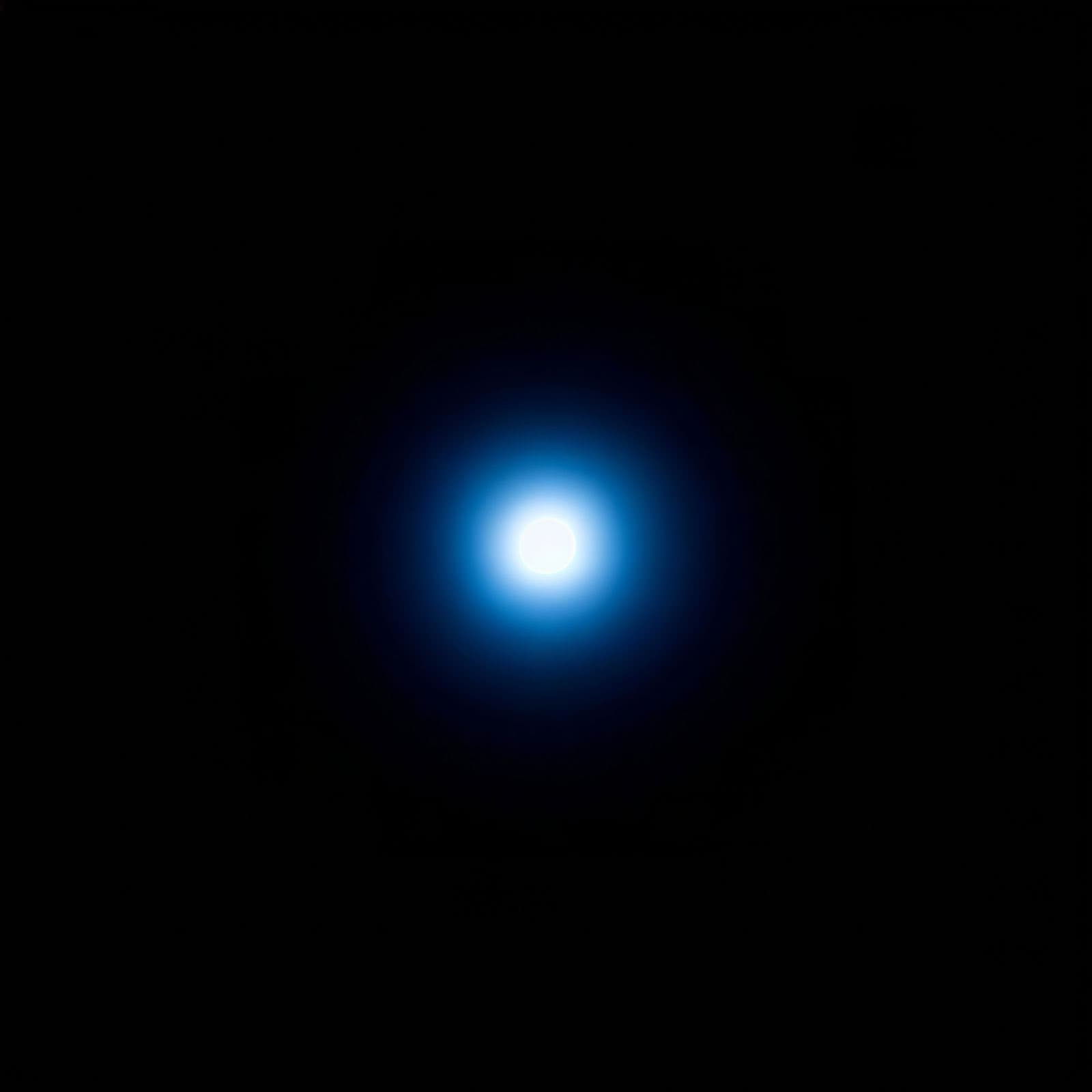
Figure 1.1 — The First Definable Region (Seed Asymmetry)
The Universe Began With a Transition — Not an Explosion
Reality did not emerge inside space.
Space emerged from something deeper.
The beginning was not an explosion in a pre-existing void.
It was a transition:
from perfect symmetry → to broken symmetry.
That transition created oscillation.
Oscillation created curvature.
Curvature created the first boundary.
And that boundary was the first Spacetime Bubble (STB):
the first region where existence had an inside and an outside…
and therefore the first region where reality could stabilize.
Before we go any further, notice something important:
if reality emerged from instability and geometry, then the universe should not be random.
It should behave like structure — because structure came first.
The Universe Behaves Like Structure
There is a fact about reality that is so familiar we rarely stop to appreciate how strange it is:
the universe is predictable.
Not in the sense that we can forecast every event—but in the deeper sense that nature behaves as if it follows a consistent internal logic. Over and over, phenomena that appear mysterious or chaotic at first are eventually revealed to obey simple rules with astonishing precision.
Even more unsettling is how often we discover those rules before we discover the phenomenon itself.
This was famously pointed out by Nobel Prize–winning physicist Eugene Wigner, who described what he called “the unreasonable effectiveness of mathematics.” The phrase captures a strange relationship: mathematics is not merely a descriptive language we invented to organize our observations. In many cases, mathematics seems to function like a set of blueprints—predicting what must exist long before we build instruments capable of detecting it.
This has happened repeatedly in physics.
Equations have predicted particles decades before experiments confirmed them. Mathematics has revealed phenomena long before we had any practical way to measure them. Again and again, reality behaves as if it already “knows” the rules—and we are simply uncovering them after the fact.
That should bother us more than it does.
Because if the universe were fundamentally chaotic—if existence were simply the accidental debris of a cosmic explosion—there would be no reason for it to be so consistently lawful. There would be no reason for nature to submit so obediently to abstract structures living in the human mind. Yet it does.
So the deeper question is not merely what laws nature follows. The deeper question is:
Why does nature have laws at all?
The most reasonable answer is also the simplest:
because reality is built on structure.
Not imposed structure. Not guessed structure. But structure that is intrinsic—structure that exists at the foundation and constrains what can happen. If that is true, then the predictability of the universe is not mysterious. It is inevitable. The universe is mathematically describable because it is mathematically constructed.
This book proposes that the most fundamental structure beneath all phenomena is curvature.
Curvature is not simply something matter creates, as a side effect of mass. In this model, curvature comes first. Matter, energy, forces, and even time emerge from stable curvature behavior. The laws of physics are not arbitrary rules added after creation—they are the natural constraints of geometry itself.
Which means that the effectiveness of mathematics is not unreasonable at all.
It is exactly what we should expect in a universe built from curvature.
The rest of this book follows that first boundary forward — showing how stabilized curvature becomes particles, atoms, forces, and the full architecture of reality.
Chapter 1 in One Sentence
If we exist, then perfect nothingness must have been capable of breaking its own symmetry — and that tiny imperfection became the universe.
This book follows that first break in perfection — from a silent universe on the edge of becoming, to stars, life, and consciousness itself — to understand why anything exists…
and why we exist inside it.
© 2025 Michael “Blair” Hopper. All Rights Reserved.
